
Diving into the realm of siding installation costs, this introduction sets the stage for a detailed exploration of the various factors influencing expenses. From materials to labor, every aspect plays a crucial role in determining the overall cost of siding installation.
Let's unravel the intricacies of pricing in this engaging narrative.
Moving forward, we will delve into the specific elements that impact the overall expenses of siding installation, shedding light on popular materials, additional costs, and effective cost-saving strategies.
Factors affecting siding installation cost
The cost of siding installation can vary based on several factors that influence the overall expense. These factors include the type of material used, the size and complexity of the siding area, and the labor costs involved.
Material Type Impact on Installation Costs
The type of siding material chosen for installation plays a significant role in determining the overall cost. For example, vinyl siding tends to be more affordable compared to materials like wood or fiber cement. The cost of materials can vary based on quality, durability, and maintenance requirements, all of which impact the installation cost.
Influence of Siding Area and Complexity on Pricing
The size and complexity of the siding area also affect the installation cost. Larger areas require more materials and labor, leading to higher expenses. Additionally, complex designs or structures may require more time and expertise to install, resulting in increased costs.
Factors like corners, angles, and trim details can add complexity to the installation process, impacting the overall pricing.
Role of Labor Costs in Determining Overall Expense
Labor costs are a significant factor in determining the overall expense of siding installation. Skilled labor is essential for proper installation, and labor costs can vary based on location, experience level, and demand. The complexity of the project can also affect labor costs, as more intricate designs or structures may require additional time and expertise from the installation crew.
Labor costs, along with material expenses, contribute to the total cost of siding installation.
Popular siding materials and their installation costs
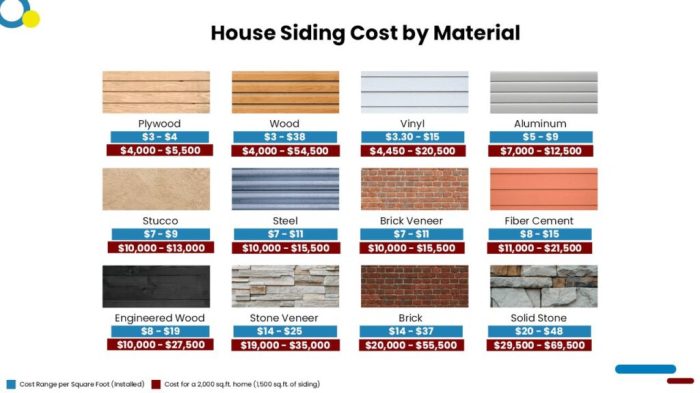
Vinyl, fiber cement, and wood are among the most popular choices for siding materials due to their durability and aesthetic appeal. Each material comes with its own installation costs, which can vary based on factors such as labor rates, material quality, and project complexity.
Breakdown of costs for vinyl siding
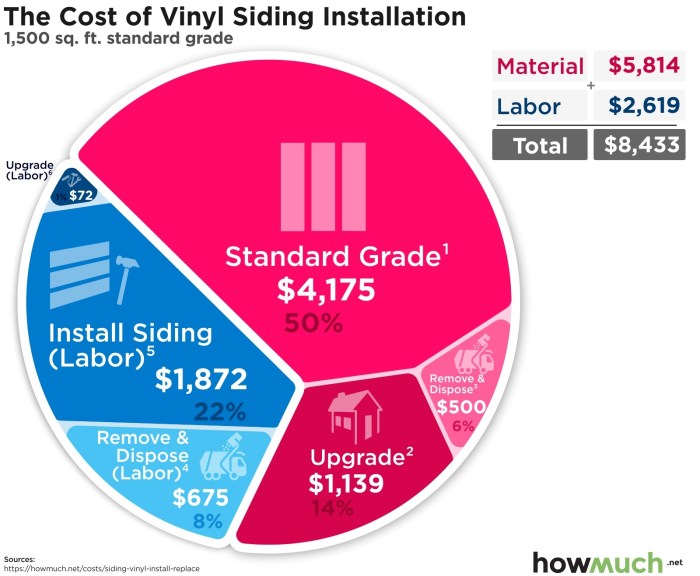
Vinyl siding is a cost-effective option for homeowners looking for a low-maintenance and durable siding material. The average installation cost for vinyl siding ranges from $3 to $7 per square foot. This cost includes the materials, labor, and any additional supplies needed for the installation.
Keep in mind that prices may vary depending on the quality of the vinyl siding and the location of the project.
Comparison of installation expenses for fiber cement siding
Fiber cement siding is known for its strength and resistance to harsh weather conditions. The installation cost for fiber cement siding typically ranges from $6 to $12 per square foot. This higher cost is due to the heavier weight of the material, which may require additional labor and equipment during installation.
However, the long-term durability of fiber cement siding often makes it a worthwhile investment for homeowners.
Pricing variations for wood siding installations
Wood siding offers a natural and timeless look to homes, but it comes with a higher installation cost compared to vinyl and fiber cement. The average cost of installing wood siding can range from $8 to $12 per square foot.
Factors such as the type of wood species, finish, and design complexity can impact the overall cost of the project. Additionally, wood siding may require more maintenance over time to preserve its beauty and integrity.
Additional expenses involved in siding installation
When considering the cost of siding installation, it is important to take into account various additional expenses that may arise throughout the process. These extra costs can significantly impact the overall expenditure and should be factored in when budgeting for your siding project.:One of the key additional expenses that homeowners often face when installing new siding is the cost of removing old siding.
This process can be labor-intensive and time-consuming, leading to higher labor costs and disposal fees for the old materials. It is essential to properly remove the existing siding to ensure a smooth and durable installation of the new siding.
Cost implications of removing old siding
Removing old siding can add a substantial amount to the overall cost of a siding installation project. The labor required to dismantle and dispose of the old materials, as well as any additional repairs needed to the underlying structure, can significantly increase the total expenses.
It is crucial to budget for this aspect of the project to avoid any surprises during the installation process.
Need for insulation and its impact on overall expenditure
Another important factor to consider is the need for insulation when installing new siding. Proper insulation can improve energy efficiency, increase the lifespan of the siding, and enhance the overall comfort of your home. However, adding insulation can come with an extra cost that should be factored into your budget.
The type of insulation, the size of the project, and the complexity of the installation can all impact the overall expenditure.
Expenses related to trim work and finishing touches
In addition to the siding material itself, trim work and finishing touches are essential components of a well-executed siding installation. These finishing details, such as corner pieces, soffits, and decorative elements, can enhance the overall aesthetic appeal of your home.
However, they can also add to the total cost of the project. It is important to consider these expenses when planning your siding installation to ensure a cohesive and polished final result.
Cost-saving tips for siding installation
When it comes to siding installation, there are a few strategies you can employ to save money without compromising on quality. Whether you opt for a DIY approach, bundle services, or negotiate with contractors, these cost-saving tips can help you stay within budget while enhancing the look and value of your home.
DIY options and potential savings
One of the most effective ways to save on siding installation costs is by taking the do-it-yourself (DIY) route. By tackling the project yourself, you can eliminate labor costs and only pay for materials. However, it's important to have the necessary skills, tools, and knowledge to ensure a successful installation.
While DIY can lead to significant savings, it's essential to assess your abilities and the complexity of the project before diving in.
Benefits of bundling services for cost reduction
Another way to save on siding installation is by bundling services. Some contractors offer discounts when you combine multiple home improvement projects, such as siding installation, roofing, or window replacements. By bundling services, you can take advantage of reduced overall costs and streamline the process by working with a single contractor for all your home improvement needs.
Strategies for negotiating with contractors to lower installation costs
When hiring a contractor for siding installation, don't be afraid to negotiate pricing. Requesting multiple quotes from different contractors can give you leverage in negotiations. Additionally, consider offering to purchase the materials yourself or being flexible with the project timeline to potentially lower costs.
Building a good rapport with the contractor and clearly communicating your budget constraints can also help in negotiating a lower installation cost.
Summary
In conclusion, the journey through siding installation costs has provided valuable insights into the complexities of pricing. From understanding the influence of material types to exploring ways to save on expenses, this discussion has equipped you with the knowledge needed to navigate the world of siding installation costs effectively.
Query Resolution
What factors can affect siding installation cost?
Material type, siding area, complexity, and labor costs are key factors that impact siding installation costs.
What are some cost-saving tips for siding installation?
Consider DIY options, bundle services for savings, and negotiate with contractors to lower installation costs.
Are there additional expenses involved in siding installation?
Yes, removing old siding, insulation, and trim work are additional expenses to consider during siding installation.